

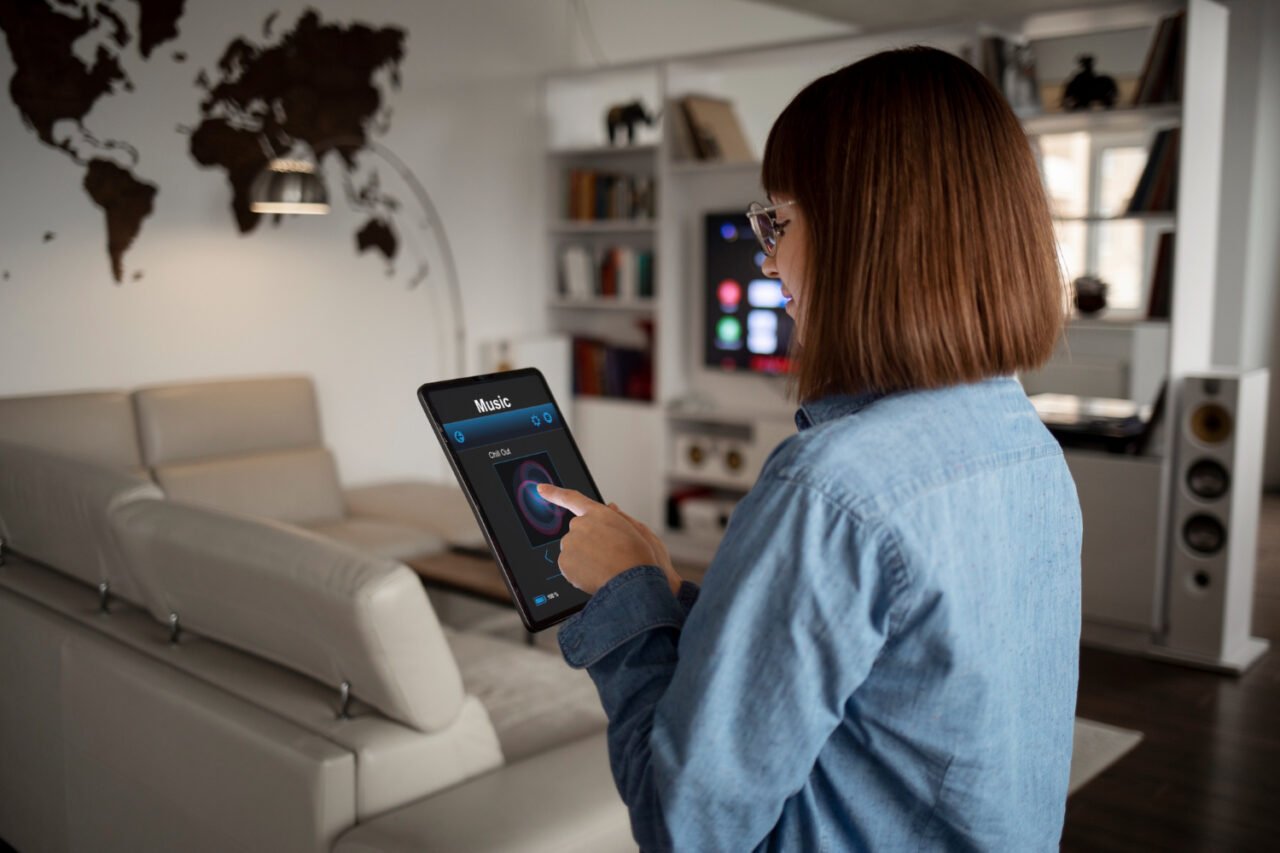
Smart home technology has moved from being a futuristic concept to becoming an increasingly common part of everyday life. Connected lights, smart speakers, security cameras, thermostats, locks, appliances, and entertainment systems can now be controlled through smartphones, voice commands, automation, or a combination of all three.
The appeal is easy to understand. Smart devices can make homes more convenient, efficient, and potentially safer. Instead of manually adjusting every device, homeowners can create systems that respond automatically to their routines and preferences.
However, smart homes also introduce new considerations around privacy, cybersecurity, compatibility, and reliability.
Understanding both the benefits and limitations of connected home technology can help consumers make better decisions about which devices are actually worth adopting.
What Makes a Home “Smart”?
A smart home generally consists of connected devices that can communicate with one another or be controlled remotely.
A traditional light switch performs one simple function. A smart light can potentially be controlled through an application, voice command, schedule, motion sensor, or automated routine.
The same principle applies to many other household products.
Smart thermostats can adjust temperatures automatically. Smart cameras can send security alerts to a phone. Smart locks can allow remote access. Smart appliances can provide notifications or operate according to schedules.
The real advantage comes when individual devices work together rather than operating independently.
1. Smart Lighting Can Simplify Daily Routines
Smart lighting is one of the easiest ways to introduce automation into a home.
Users can turn lights on or off remotely, create schedules, adjust brightness, and sometimes change lighting characteristics.
For example, lights can be programmed to switch on around the time someone normally arrives home.
Motion sensors can also activate lights when someone enters a room and turn them off when the space is empty.
These small automations can make everyday routines more convenient.
Smart lighting can also be useful when traveling. Homeowners can remotely control lights or create schedules that make an unoccupied home appear occupied.
2. Smart Security Systems Provide Remote Monitoring
Home security has become one of the most popular applications for connected technology.
Smart cameras, doorbells, motion sensors, alarms, and locks can provide homeowners with information about what is happening around their property.
Many systems can send notifications when motion is detected or when someone approaches a door.
Some cameras can distinguish between different types of activity, although users should understand how such features work and what information is being collected.
Remote monitoring can provide additional convenience, particularly for people who travel frequently.
However, security devices themselves need to be properly secured because they are connected to the internet.
3. Smart Locks Can Replace Traditional Keys
Connected locks can provide alternatives to conventional keys.
Depending on the model, users may be able to unlock a door through a smartphone, keypad, biometric authentication, or temporary digital credentials.
This can be useful for households that need to provide access to family members, guests, cleaners, or service providers.
Temporary access can often be created without physically handing someone a key.
However, homeowners should consider what happens if the device loses power, the network becomes unavailable, or the digital system experiences a failure.
A reliable backup method remains important.
4. Smart Thermostats Can Improve Energy Management
Heating and cooling can account for a significant portion of household energy consumption in many environments.
Smart thermostats can use schedules, sensors, and other information to adjust temperature settings automatically.
Instead of maintaining the same settings throughout the day, a system can potentially reduce energy use when nobody is home.
Remote controls can also allow users to adjust settings before returning home.
The actual savings depend on the home, climate, equipment, settings, and user behavior.
Smart technology does not automatically guarantee lower energy consumption, but automation can make efficient behavior easier.
5. Smart Appliances Are Becoming More Connected
Refrigerators, washing machines, ovens, vacuum cleaners, and other household appliances are increasingly available with connected features.
A smart washing machine might notify a user when a cycle has finished.
A robotic vacuum can operate according to a schedule.
An oven may allow remote monitoring or control.
These features can be convenient, but consumers should consider whether the additional functionality provides enough value to justify the cost and complexity.
Not every appliance needs an internet connection.
6. Voice Assistants Can Connect the Home
Voice assistants can act as an interface between people and connected devices.
Instead of opening an application, users can issue voice commands to control lights, music, thermostats, or other compatible equipment.
Voice control can be particularly useful when someone’s hands are occupied.
It can also make certain smart-home functions more accessible to people who have difficulty using traditional interfaces.
However, voice-enabled devices introduce privacy considerations because they are designed to listen for commands.
Users should review microphone, recording, and data-retention settings.
7. Smart Homes Can Automate Routines
Automation is arguably the most powerful feature of a connected home.
A homeowner can create routines that combine multiple devices.
For example, a “Good Morning” routine could adjust lighting, provide weather information, and activate selected appliances.
An “Away” routine could turn off lights, adjust the thermostat, lock doors, and activate security equipment.
These routines reduce the need to manually control individual devices.
The more devices become compatible with the same ecosystem, the more sophisticated these automations can become.
8. Smart Technology Can Help Older Adults
Connected-home technology can also support independent living.
Automated lighting can reduce the need to move around in darkness.
Sensors can provide alerts about unusual activity.
Voice interfaces can allow users to interact with devices without navigating complex menus.
Remote monitoring can also allow family members or caregivers to receive appropriate notifications, depending on the system and the user’s consent.
However, technology should complement rather than unnecessarily replace human support.
Privacy and autonomy should remain important considerations.
9. Smart Homes Depend on Connectivity
One limitation of connected technology is that many devices depend on networks, cloud services, or both.
If the internet connection fails, certain remote features may stop working.
Some devices continue functioning locally, while others may lose significant functionality.
Consumers should therefore investigate how a device behaves when the internet is unavailable.
A smart device that becomes completely unusable during a temporary connection problem may be less practical than one that retains basic functionality.
10. Compatibility Matters
Not every smart-home device works with every ecosystem.
Consumers can encounter problems when purchasing devices from multiple manufacturers that use different standards or platforms.
Before buying a new device, check whether it is compatible with the other products already installed in the home.
Interoperability is becoming increasingly important as the smart-home market develops.
The goal should be to build an ecosystem rather than a collection of disconnected devices.
11. Privacy Is an Important Consideration
Smart-home devices can collect significant amounts of information.
A camera can capture video. A smart speaker may process voice commands. A connected thermostat can reveal information about occupancy and routines.
This data can potentially reveal when people are home, when they leave, and how they use their property.
Consumers should therefore review privacy policies and device settings before purchasing connected products.
Features that are unnecessary should be disabled where possible.
Users should also understand where information is stored and whether it is processed locally or through remote servers.
12. Cybersecurity Cannot Be Ignored
Every internet-connected device can potentially become a security concern if it is poorly protected.
Consumers should change default credentials where applicable, install firmware updates, use strong account passwords, and enable multi-factor authentication when supported.
A home network should also be secured with a strong Wi-Fi password.
Where possible, particularly sensitive devices can be placed on appropriately separated networks.
Keeping smart devices updated is especially important because manufacturers may release security patches to address newly discovered vulnerabilities.
13. Smart Homes Can Generate More Electronic Waste
Technology upgrades can create another problem: electronic waste.
Consumers may replace connected devices when manufacturers stop supporting them or when newer products offer additional features.
A smart home can therefore become expensive and environmentally wasteful if products are replaced unnecessarily.
Before purchasing a device, consider how long it is likely to receive software and security support.
Long-term support can be just as important as the features advertised at launch.
The Future of Smart Homes
Smart homes are likely to become increasingly automated.
Artificial intelligence could help systems understand routines and make suggestions without requiring users to manually program every action.
Sensors could allow homes to respond dynamically to occupancy, energy use, weather, and other conditions.
For example, a home might automatically adjust lighting and temperature depending on which rooms are occupied.
The challenge will be creating systems that are intelligent without becoming intrusive.
Consumers should remain in control of automation and personal information.
Conclusion
Smart home technology is changing the way people interact with their living spaces.
Connected lighting, security systems, locks, thermostats, appliances, and voice assistants can make homes more convenient and automated.
However, smart technology is not automatically better technology.
Consumers should consider cost, compatibility, reliability, privacy, cybersecurity, and long-term software support before adding connected devices.
The best smart home is not necessarily the one with the largest number of gadgets. It is the one where technology solves genuine problems and works reliably in the background.
As connectivity and artificial intelligence continue to develop, homes may become increasingly responsive to the people living inside them. The most successful smart-home technologies will likely be those that make everyday life simpler without making it unnecessarily complicated.